
The History of the Hungarian Defence Forces: From Pákozd to NATO
Pákozd Military Memorial Park, 27 September 2024
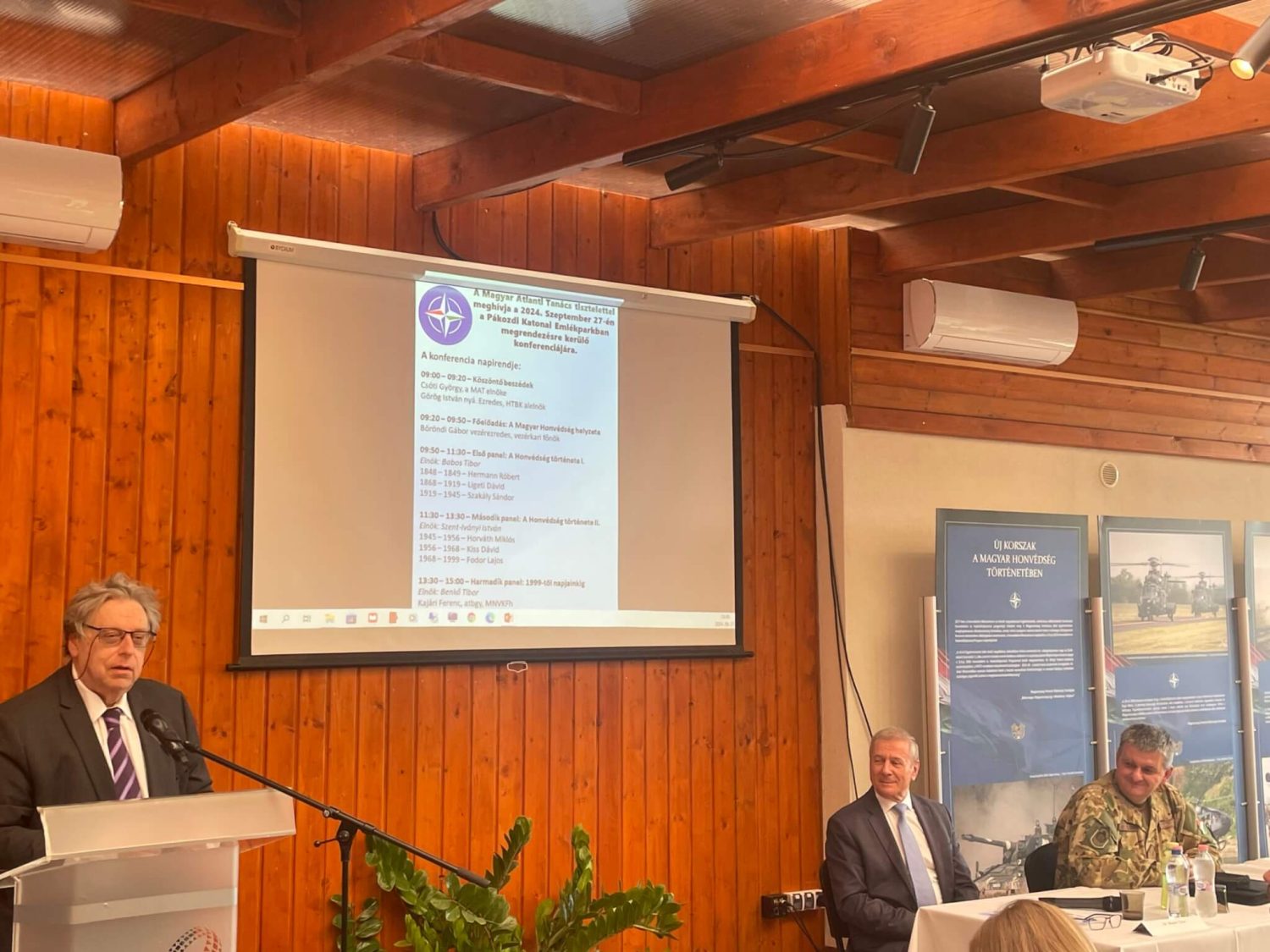
On 27 September 2024, the Hungarian Atlantic Council and the International Centre for Development and Democratic Transition held a conference in Pákozd as the first step of a major long-term project. The conference was opened by György Csóti, President of the Hungarian Atlantic Council.
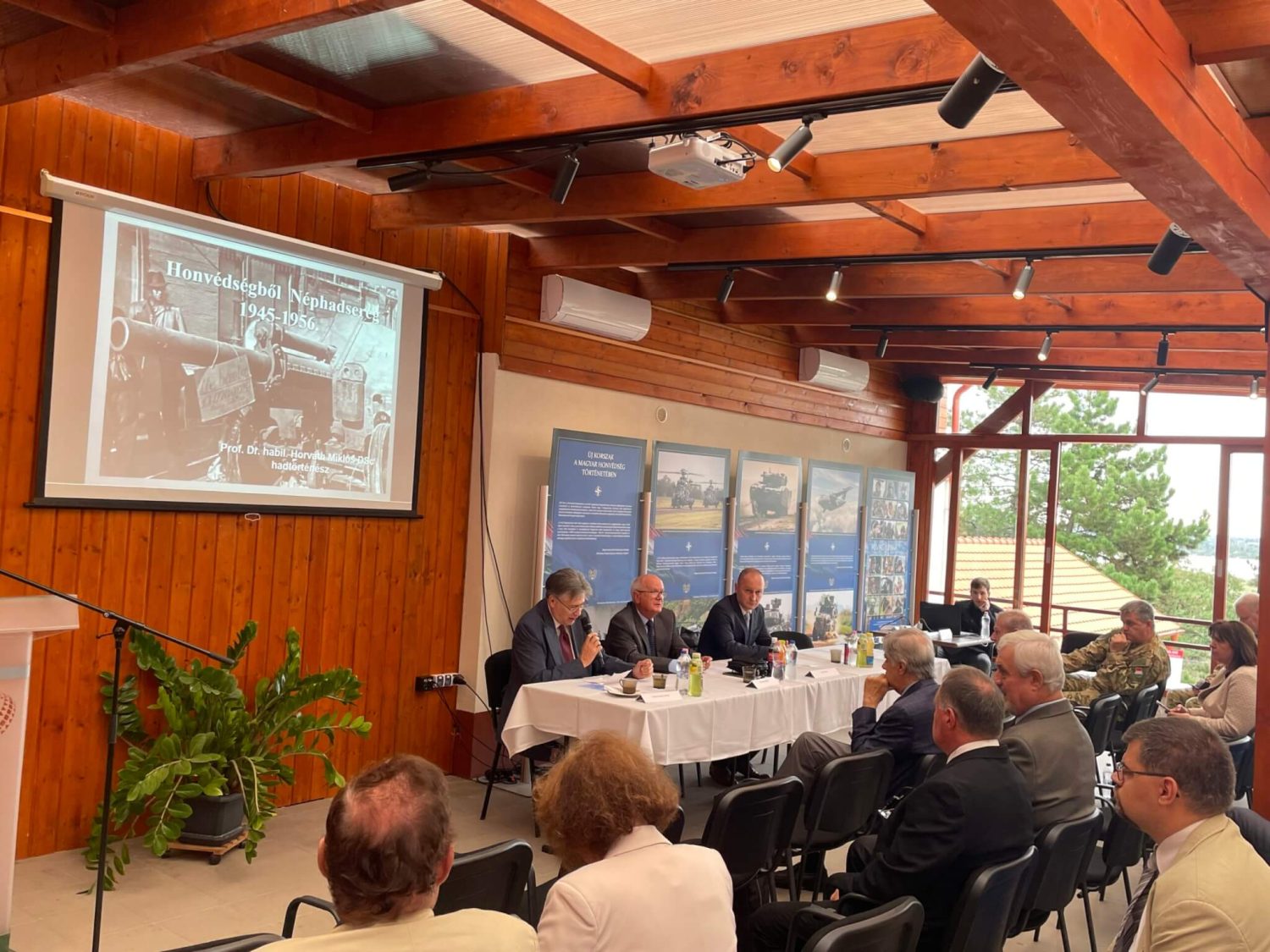
The opening address highlighted the significance and historical role of the Hungarian Defence Forces, with particular emphasis on their contribution to the Hungarian Revolution and War of Independence of 1848–1849. The first National Guard battalions were established on the initiative of Lajos Batthyány, laying the foundations of what would later become the Hungarian Defence Forces. The event also recalled the role of Sándor Petőfi, who regarded the Defence Forces as a symbol of patriotism. Throughout the conference, particular emphasis was placed on the importance of national defence in both Hungarian history and the current geopolitical environment, as well as on the need to restore the prestige of the Hungarian Defence Forces within society. The conference marked the first step in a long-term project, which also includes plans to publish an academically grounded volume on the history of the Hungarian Defence Forces.
Colonel István Görög, Vice President of the Circle of Friends of the Defence Forces and Society, welcomed the participants to the Military Memorial Park. In his opening remarks, he highlighted the 30th anniversary of the organisation, which was founded in 1994 by writer István Nemeskürty and General Dr. Béla Gyuricza. He emphasised that the organisation continues to pursue the mission set out by its founders, with particular focus on promoting the Euro-Atlantic idea and raising public awareness of NATO’s role in society.
The Circle of Friends of the Defence Forces and Society has launched several important initiatives, including the School of Patriotism programme, which targets youth groups and schools. The organisation also played an active role in preparing Hungary’s 1997 referendum on NATO accession and has continued ever since to contribute to strengthening public support for NATO in Hungary.
The Current State of the Hungarian Defence Forces
In his presentation, General Gábor Böröndi analysed the importance of the development of the Hungarian Defence Forces and their cooperation with NATO. He pointed out that although Europe had long believed that the era of wars was over, the Russia–Ukraine conflict demonstrated that armed conflicts remain a genuine security threat. Europe has recognised the need to strengthen its defence capabilities, and Hungary has responded by modernising its armed forces.
General Böröndi stressed that the global security environment is continuously evolving, particularly due to the strategic competition between the United States, Russia, and China. For Hungary, maintaining stability in the Western Balkans and the Sahel region is of particular importance, as developments in these regions can directly affect the country’s security.
He noted that the war in Ukraine has shown that, alongside conventional military capabilities, new technologies—including drone warfare and advanced logistics—have become indispensable. The General explained that Hungary’s defence modernisation programme began at the right time, in 2016–2017, enabling the procurement of modern main battle tanks, artillery systems, helicopters, and other military equipment.
Beyond procurement, he emphasised that organisational modernisation is equally important, as today’s security environment requires flexible and rapidly deployable armed forces. The development of the reserve force system is of strategic significance, strengthening the connection between the military and society while encouraging youth participation and patriotic education.
General Böröndi also highlighted the integration of modern military technologies, such as drones and Lynx infantry fighting vehicles, which are essential for maintaining the operational effectiveness of the Hungarian Defence Forces. The combination of advanced technology and traditional military capabilities, he argued, has become a key requirement for successful warfare, as demonstrated by the lessons of the Russia–Ukraine conflict.
Regarding NATO, he underlined that Hungary is making steady progress in meeting the Alliance’s capability targets, particularly in the areas of heavy brigade development and air defence systems. Hungary has fulfilled its defence spending commitments and continues to participate actively in NATO operations. The establishment of the Multinational Division Centre Headquarters in Székesfehérvár further strengthens Hungary’s strategic role on NATO’s eastern flank.
In conclusion, General Böröndi stated that the Hungarian Defence Forces aim to become a modern, highly capable military able to respond effectively to future security challenges. Technological development, the modernisation of command culture, and the introduction of new training methods all contribute to ensuring that Hungary is able to defend itself both independently and within the framework of NATO.
The History of the Hungarian Defence Forces (1848–1945)
Historian Róbert Hermann presented the successful organisation of the Hungarian armed forces during the Hungarian Revolution and War of Independence of 1848–1849. He began by noting that prior to 1848 Hungary had no independent military, as command of the armed forces rested entirely with the monarch. The Hungarian Parliament exercised only limited influence through approving military recruitment quotas and war taxation, often negotiating these matters with Vienna during times of political tension.
Following the establishment of Hungary’s first independent and responsible government, Prime Minister Lajos Batthyány took important steps to place the Hungarian-based units of the Imperial and Royal Army under the authority of the Hungarian government. However, both the Imperial military leadership and local commanders resisted these efforts, particularly the constitutional transformation taking place in Hungary.
Alongside the National Guard, established in 1848 to maintain internal order, the organisation of a mobile military force—the Hungarian Defence Forces —also began, eventually becoming one of the decisive elements of the War of Independence. By May, the government had already ordered the formation of ten Honvéd battalions capable of rapid mobilisation. Initially deployed against Serbian and Croatian forces in southern Hungary, these units were later reinforced by additional formations as the conflict expanded.
Through the introduction of compulsory military service, Lajos Batthyány ensured that the Honvédség developed into a mass army. By the end of 1848, 67 battalions had been established, increasing to nearly 160 battalions the following year. The artillery of the Hungarian Defence Forces proved particularly effective, frequently outperforming its Imperial counterpart on the battlefield. In addition to the regular Honvéd units, foreign legions, rifle units, and hussar regiments also played significant roles during the campaign.
Historian Róbert Hermann emphasised that the Hungarian Defence Forces were organised in a remarkably short period of time and developed into an effective fighting force that the Austrian Imperial Army alone was unable to defeat. The fact that Tsarist Russia deployed approximately 200,000 troops to intervene demonstrated the significant challenge posed by the Hungarian forces.
Historian Dávid Ligeti focused on the first fifty years of the Royal Hungarian Defence Forces, their participation in the First World War, and the turbulent period of 1918–1919. Following the Austro-Hungarian Compromise of 1867, the Royal Hungarian Defence Forces were established under Act XLI of 1868, with a complementary role: maintaining internal order in peacetime and supporting the Common Army during wartime. Initially consisting of infantry and cavalry units, the force did not establish its own artillery branch until 1912.
During the Dual Monarchy, the Royal Hungarian Defence Forces were primarily responsible for territorial defence, although they also took part in the occupation of Bosnia. Throughout this period, the balance of power between the Common Army and the Hungarian Defence Forces remained the subject of political debate. Hungarian political leaders sought a stronger and more autonomous national force, while Vienna attempted to limit its development.
During the First World War, the Hungarian Defence Forces raised 17 divisions and played an important role on several fronts, including Doberdò, the Isonzo Front, and the fighting in Transylvania. Ligeti also highlighted the achievements of the 20th Honvéd Division, which distinguished itself in both the Carpathian and Isonzo campaigns. The political and military turmoil of 1918–1919 further complicated the situation of the Hungarian armed forces.
During the period of the Hungarian People’s Republic, the military leadership sought to maintain only a minimal armed force. However, under the Hungarian Soviet Republic, the Red Army was established with considerably greater strength and responsibilities, accompanied by the introduction of a Soviet-style political officer system. Although the Red Army initially achieved military successes, it ultimately collapsed.
Historian Professor Sándor Szakály examined the military developments between 1919 and the Second World War. He began by noting that in 1919 Hungary had two armies: the Red Army and the Hungarian National Army, organised in Szeged under the leadership of Miklós Horthy to oppose Bolshevism. Although the National Army initially numbered only a few thousand men, it absorbed much of the Red Army following its collapse.
The Treaty of Trianon imposed severe restrictions on Hungary’s armed forces, limiting their strength to 35,000 personnel and prohibiting the establishment of an air force and armoured units. In response, the Royal Hungarian Defence Forces continued their development through concealed organisational structures, including customs guard and border guard regiments designed to circumvent these restrictions.
Professor Szakály explained that during the 1920s and 1930s the organisation of the Royal Hungarian Defence Forces gradually evolved, first through mixed brigades and later, from 1939, into army corps. By the late 1930s, the Bled Agreement and the Győr Programme created new opportunities for military modernisation, including significant investments in infrastructure such as airfields and roads.
During the Second World War, the Royal Hungarian Defence Forces expanded both in size and operational responsibilities, including the establishment of light divisions, although these remained smaller than their German counterparts. Professor Szakály also highlighted important technological developments, including the Botond military truck and the Zrínyi assault gun, both regarded as significant achievements of Hungarian military engineering during the period.
Despite facing considerable material and technological disadvantages, Hungarian soldiers performed honourably from a military perspective. Professor Szakály concluded by emphasising that, regardless of the side on which they had previously served, Hungarian soldiers shared a common spirit of comradeship.
The History of the Hungarian Defence Forces (1945–1968)
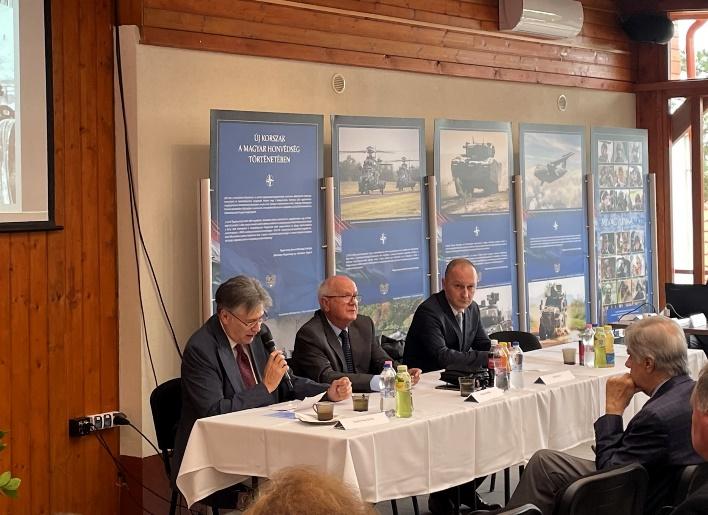
In his presentation, historian Dr. Miklós Horváth discussed the military events of the 1956 Revolution and War of Independence, as well as the related historical context, with particular attention to the role of the Hungarian armed forces. He initially focused on the question of whether Hungary was at war with the Soviet Union and whether it had waged a defensive war against the Soviet occupiers in 1956. Professor Horváth emphasized that the events did not begin on November 4, but had earlier precedents, as Soviet troops had arrived in Hungary in 1944 and remained in the country until 1991. Following the Soviet occupation in 1944, the transformation of the Hungarian armed forces began immediately. As part of this process, the Soviet-controlled provisional national government also started establishing a new army. The Hungarian government undertook to create eight divisions equipped with heavy weaponry, which were expected to participate in military operations according to Soviet requirements. However, the Soviets sought to limit the strengthening of the Hungarian armed forces, as they did not want the new government’s position to become too powerful during future peace negotiations. Dr. Horváth presented in detail how the first two divisions were established and the difficulties Hungarian troops faced due to shortages of technical equipment and logistical resources. Following the end of the war, these divisions operated mainly in security roles under Soviet command. After the war, the newly established army underwent rapid downsizing, as neither the Soviets nor the domestic authorities wished to maintain a large military force, particularly due to the economic difficulties caused by the war. Dr. Horváth highlighted that the Hungarian Communist Party gradually gained increasing control over the army with the support of the Soviet Allied Control Commission, allowing it to exercise tighter supervision over military operations. With the introduction of the political officer system, loyalty to the party became the primary criterion, and the transformation of the officer corps began accordingly. By 1956, this process had resulted in very few officers remaining who had received their training before or during the Second World War. During the period of Sovietization, the size of the Hungarian army was limited to 65,000 personnel as stipulated by the peace treaty, creating significant challenges for the development of the armed forces. At the same time, tensions with Yugoslavia also influenced military strategy: Hungary and the Soviet Union developed plans against the Yugoslav communist leadership under Tito, which were tested through military exercises.
By 1956, the situation of the army had further deteriorated. The officer corps was considered unreliable by the communist leadership, and the army’s social integration became increasingly important. Professor Horváth emphasized that the government did not trust the loyalty of the armed forces and therefore deployed military units only to a limited extent during the revolution. For example, when tanks were deployed in Budapest, their ammunition had been removed because the authorities feared that soldiers might join the side of the insurgents. Therefore, during the revolution, the Hungarian army was only capable of limited action against the rebels, particularly because the government itself lacked confidence in its own soldiers. Soviet forces played the decisive role in suppressing the revolution, and after 1956 the Soviet army remained the factor that maintained the communist regime in Hungary. János Kádár was also aware of this, later acknowledging in a speech that the Hungarian army alone would not have been able to defend the communist system had the Soviets withdrawn from the country. In conclusion, Dr. Horváth Miklós stated that the events of 1956 demonstrated from a military perspective that Hungary had fought a defensive war against overwhelming Soviet forces. This was also recognized by the Soviet leadership, as demonstrated by Khrushchev’s own words, in which he described the Soviet military intervention in Hungary in 1956 not as a simple police operation but as a military campaign. Historian Dávid Kiss focused his presentation on the period between 1956 and 1989, highlighting the development and restructuring of the Hungarian People’s Army. The era was defined by the 1947 Paris Peace Treaty, which established a maximum size for the Hungarian military. Although the People’s Army was reorganized after the 1956 Revolution, one of the greatest fears of the Kádár regime was the possibility of another uprising. This concern influenced military organization, mobilization plans, and the strengthening of internal security forces such as the armed security units and the Workers’ Guard. Kiss Dávid also discussed the continuous development of the army, particularly during the 1960s, when efforts were made to rebuild Hungary’s military industry. During modernization, Hungarian and Soviet weapons were introduced, and close cooperation developed with the Soviet Union within the framework of the Warsaw Pact. By the late 1980s, economic difficulties slowed military development, and the country’s economic situation created significant challenges for the armed forces. Overall, the presentations demonstrated that the organization and development of the Hungarian People’s Army were closely connected to the Soviet sphere of influence, and that the political security of the Kádár regime fundamentally depended on the presence of Soviet forces.
The History of the Hungarian Defence Forces from 1990 to the Present Day
In his presentation, former Minister of Defence Tibor Benkő focused on the period between 1990 and 1999, highlighting the transformation of the Hungarian Defence Forces following the change of political system. He explained that during this period the armed forces were searching for their new role, while Hungary was moving away from the constraints of the bipolar world order. The Yugoslav crisis made it clear to political decision-makers that Euro-Atlantic integration was the appropriate direction, a path further reinforced by Hungary’s participation in NATO’s Partnership for Peace programme in 1994. The presentation emphasized that the size of the armed forces was significantly reduced during this period: the former 125,000-person Hungarian People’s Army decreased to 45,000 personnel within a decade. The series of defence reforms carried out by four successive governments primarily focused on reducing personnel numbers and shortening military service, which was reduced from 18 months first to 12 months and later to 6 months.
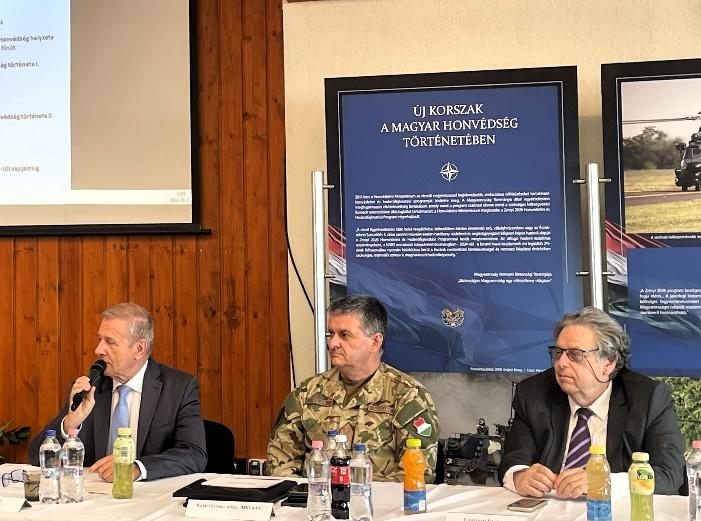
Alongside the reduction in military personnel and the shortening of service periods, Tibor Benkő emphasized that the prestige of the Hungarian Defence Forces was also negatively affected by this process. At the same time, defence development based on Euro-Atlantic values and interests has continued to define the direction of the Hungarian Defence Forces’ development ever since.
In his presentation, Lieutenant General Ferenc Kajári discussed the development and challenges of the Hungarian Defence Forces from Hungary’s NATO accession in 1999 to the present day, with particular emphasis on the process of integration into the Alliance. One of the key points of his presentation was that Hungary’s NATO membership placed the Hungarian Defence Forces on a long-term development path, during which the military was transformed in accordance with the requirements of the world’s strongest defensive alliance. Ferenc Kajári noted that preparations for NATO accession had already begun in 1993–1994 through various international courses and training programmes. Hungary joined NATO in 1999; however, at that time the Hungarian Defence Forces were still facing serious financial constraints, and further reductions were made in several areas, including heavy military equipment. These included the withdrawal of armoured vehicles, tanks, and other military assets. A significant focus of the presentation was the fact that, at the time of accession, the Hungarian Defence Forces faced major challenges due to a mixed regulatory and doctrinal background. Officers with different educational and professional backgrounds often brought home military regulations from various countries, which resulted in inconsistent procedures. However, from 1999 onwards, the integration and application of NATO-required regulations and procedures steadily improved, and by 2007 significant progress had been achieved in this area. The Lieutenant General also addressed the issue of language skills, which represented a major challenge during the initial period, but today the personnel of the Hungarian Defence Forces — including a significant part of the non-commissioned officer and enlisted ranks — possess adequate language capabilities. Furthermore, considerable progress has been made in training and doctrinal development, enabling the Hungarian Defence Forces to become increasingly professional and interoperable with other members of the Alliance. The technical equipment of the Hungarian Defence Forces has also undergone significant modernization, and participation in various operations has demonstrated that Hungarian soldiers perform at a high level. The participation of the Hungarian Defence Forces in the KFOR mission serves as an example of this, where Hungarian units’ equipment and preparedness stood out among Allied forces. Ferenc Kajári also outlined Hungary’s participation in NATO’s planning and decision-making processes, which has continuously developed since accession. He explained that while NATO requirements were previously regarded almost unquestioningly, the Hungarian Defence Forces today are capable of engaging in meaningful discussions and defending their positions with professional arguments.
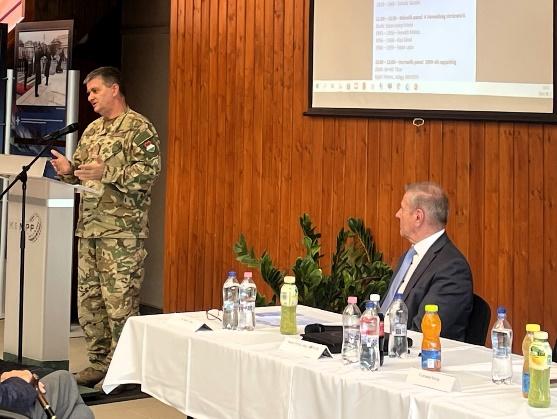
At the end of his presentation, Lieutenant General Ferenc Kajári divided the period of Hungary’s NATO membership into three phases:
1. The period of initial steps (1999–2001):
This period was characterized by adaptation, during which the Hungarian Defence Forces sought to meet NATO’s requirements and standards.
2. The period of development (2001–2017):
During this phase, the Hungarian Defence Forces gradually built up their operational capabilities and strengthened their position within the alliance.
3. The current phase (2017–present):
This is the period of reaching maturity, during which the Hungarian Defence Forces have developed independent operational capabilities and are also striving to take on a leading role within the alliance.
In summary, Lieutenant General Kajári pointed out that the Hungarian Defence Forces have now become a recognized member of NATO, equipped with modern technology and highly trained personnel. They are capable of independently carrying out complex operations while also representing Hungarian national interests on the international stage.
István Gyarmati, Secretary General of the Hungarian Atlantic Council, addressed several important issues in his presentation, focusing especially on the differences between soldiers and civilians, the history of Hungary’s accession to NATO, and the nature and challenges of modern warfare. He acknowledged the development and professionalism of Hungarian soldiers, emphasizing that while he had previously often debated professional issues with military personnel, today he increasingly recognizes that soldiers are well-trained and capable of solving complex tasks. This became particularly evident after Hungary joined NATO, as the Hungarian Defence Forces gradually integrated into the alliance and improved their performance in international missions. Gyarmati István looked back at the Partnership for Peace programme, which was originally designed partly as a way to delay NATO enlargement. However, Hungary and its allies transformed the programme into a pathway toward NATO membership. He also mentioned the key moments of NATO enlargement and explained that American decision-makers ultimately supported the process, which led Hungary to become a member of the alliance. He paid special attention to the nature of modern conflicts, particularly comparing the Russian-Ukrainian war with the conflict surrounding Israel. According to Gyarmati István, the Russian-Ukrainian war is a classic territorial conflict, while the conflict between Israel and the Palestinians represents a new type of civilizational conflict, raising much deeper problems and being far more difficult to resolve in the long term. In his view, today’s political leadership around the world is not fully prepared to manage these challenges, and military tools alone are not sufficient to understand and resolve such conflicts. Finally, he emphasized the importance of military-civil cooperation and acknowledged that Hungarian soldiers have achieved significant success on the international stage, in many respects performing more effectively than civilian political leadership.
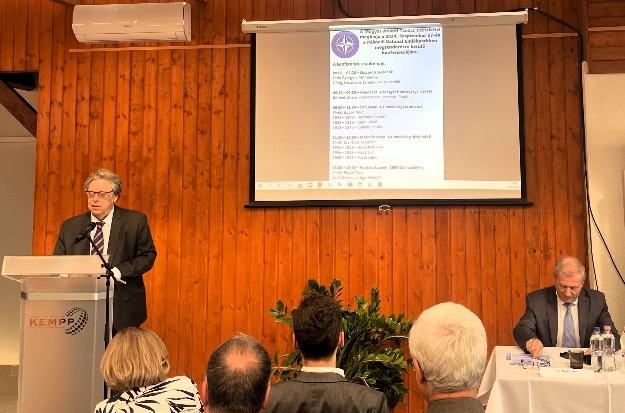
During his presentation, Tibor Benkő, former Minister of Defence, emphasized the importance of developing the Hungarian Defence Forces and the role of political will in this process. After being appointed Chief of Defence Staff in 2010, he submitted a report to Prime Minister Viktor Orbán on the condition of the Hungarian Defence Forces. The Prime Minister acknowledged the problems, but due to the country’s economic situation at the time, there was not yet an opportunity to implement the necessary developments. Benkő Tibor pointed out that Hungary had to wait until 2015 for the economy to stabilize, after which the modernization of the Defence Forces received political approval and the Defence and Armed Forces Development Programme could begin. He mentioned the establishment of the Central European Multinational Division Headquarters in Székesfehérvár, which was created after two years of negotiations, as NATO was initially reluctant to support the initiative. Benkő encouraged military leaders to remain persistent and emphasized that goals within the alliance can only be achieved through determination and continuous effort.
He also spoke about the commitment of young people, emphasizing that with appropriate communication and guidance, they can understand and embrace the importance of national defence. He highlighted the cadet programme and the voluntary reserve service system as successful initiatives that introduce young people to Euro-Atlantic values and encourage their connection with defence issues. Finally, he drew attention to the active role of the Association for Friendship between the Defence Forces and Society, which maintains a close relationship between the military and society and plays an important role in preserving military traditions.
In his closing remarks, Tibor Benkő reaffirmed the importance of patriotic education and promoting a career path within the defence sector. He emphasized that a military career does not end with active service but also extends into retirement, where recognition and respect should be given to all those who have committed themselves to serving national defence. He also spoke about the importance of the cadet programme and patriotic defence education, which help prepare and guide young people toward a possible military profession.
Benkő Tibor also stressed that military-related ideas and perspectives should become part of the academic and scientific world, as this is essential for achieving long-term results. In this context, he mentioned that he encourages his students to write theses and dissertations on topics related to national defence and military studies.